You’re in a wine shop or staring at a restaurant list, and every other red seems to be Malbec from Argentina. Same grape. Similar labels. Very different bottles. The best malbec in argentina isn’t the most expensive one or the one with the fanciest back label. It’s the one that fits what you like, what you’re eating, and what you want to spend.
You don’t need wine training to get this right. You need a few clear shortcuts.
Why Choosing a Malbec Feels Like a Test
You grab a bottle, then put it back.
One says Uco Valley. One says Luján de Cuyo. One says Reserva. Another says old vines. You start wondering if you’re supposed to know what any of that means. It's common not to know. People just don't say it out loud.

Argentina doesn’t make the choice easier by being the clear giant in Malbec. It produces over 70% of the world’s Malbec and has about 45,000 hectares planted to it, according to Wine Intelligence coverage of Wine-Searcher’s Best Malbecs of 2025. Malbec was introduced there in 1852, and it now makes up the vast majority of the country’s premium red wine exports in that same source.
Too many choices creates fake pressure
When shelves are packed with options, your brain starts treating the decision like a quiz.
You start asking the wrong questions:
- Am I missing something obvious
- Is the cheapest one a mistake
- Do I need to know regions and producers first
- Will I look clueless if I order the wrong one
That pressure is the true problem. Not the wine.
You’re not bad at choosing wine. You’re reacting to too much information and too little clarity.
“Best” should mean right for you
A lot of best-of wine content is built for people who enjoy comparing producers, vintages, and lists. That’s fine if you love wine as a hobby. It’s not helpful when you need a bottle in five minutes for burgers, pasta, or dinner with friends.
A better question is simpler.
What kind of Malbec do you want tonight?
That shift matters. It turns wine from a test into a matching problem. Flavor, food, mood, budget. That’s it.
If you want a calmer way to think about wine in general, Sommy’s guide on how to choose wine is useful for the same reason. It starts with your taste, not wine trivia.
The goal is not perfection
You’re not trying to identify the one “correct” bottle in the whole store.
You’re trying to avoid obvious mismatch. You want a bottle that feels easy to enjoy. Once you do that, Argentine Malbec becomes one of the safest and most satisfying red wine categories you can buy.
That’s why people keep coming back to it.
A Simple Framework for Your Perfect Malbec
Forget ratings. Ignore long shelf talkers. Start with three questions.
Ask what you want it to taste like
Most Malbec drinkers are choosing between two broad moods.
If you want a wine that feels more juicy and fresh, look for a bottle that sounds lighter on its feet. Think red fruit, floral notes, and a cleaner finish.
If you want something softer and darker, choose a bottle that sounds more plush. Think plum, cocoa, smooth texture, and a rounder feel.
Here’s the shortcut:
- Juicy and fresh
Good if you usually like reds that don’t feel heavy. Also a smart move for pizza, burgers, and mixed dinner tables. - Dark and smooth
Good if you want comfort. Better for steak, lamb, slow-cooked dishes, and nights when you want the wine to feel fuller. - Somewhere in the middle
Often the safest restaurant order if you’re sharing food and want no drama.
Decide what kind of night it is
A weeknight bottle and a celebration bottle shouldn’t carry the same job.
A casual Tuesday Malbec should be easy. You want fruit, enough structure to work with dinner, and no need to “study” the glass.
A bottle for a gift or a slower dinner can ask for more. You might want extra polish, more depth, and a little more concentration.
Practical rule: Match the wine’s job to the moment. Don’t pay for a special-occasion bottle when all you want is a red for takeout and a movie.
Set a number before you look
Most wine stress starts after you start browsing. Set your budget first.
Not “cheap.” Not “good value.” Pick an actual ceiling that feels comfortable to you, then stay there.
That one step cuts out half the noise. It also stops the common spiral where you keep moving up in price because you assume more expensive means safer.
It doesn’t.
Use the framework in real life
Here’s how it plays out fast.
Scenario one
You’re ordering at a restaurant. You want a red for burgers and fries, and your table doesn’t want a huge wine. Pick a fresher style of Argentine Malbec.
Scenario two
You’re shopping for lamb at home and want something cozy. Pick a darker, smoother style.
Scenario three
You’re bringing wine to a dinner party and don’t know the menu. Choose a balanced middle-ground Malbec from a known Mendoza area and avoid labels that scream “power” or “oak-heavy.”
What to ignore
You can safely ignore a lot.
- Long tasting notes often add more noise than help
- Gold stickers don’t tell you whether you’ll enjoy the bottle
- Back-label poetry is usually marketing, not guidance
- Trying to impress people is the fastest way to choose badly
A simple personal filter works better. If you want another quick version of that filter, Sommy’s guide on how to pick wine keeps it practical and low-stress.
Your three-question cheat sheet
Use this when you’re standing in front of the shelf:
That’s enough to choose well.
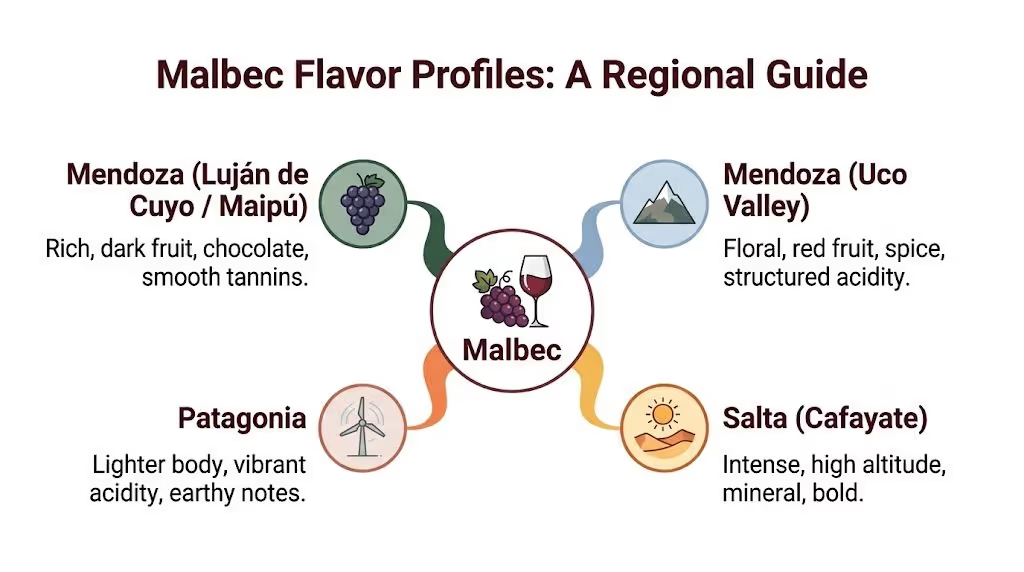
Decoding Malbec Styles by Region Without a Map
You don’t need to memorize Argentine geography. You only need to know that region names are flavor clues.
Uco Valley means fresher and more lifted
If you see Uco Valley on the label, expect a style that usually feels brighter and more lively.
High-elevation vineyards there hold onto freshness because cool nights help preserve acidity while sunny days still bring ripeness, according to Wine Folly’s Malbec guide. That’s why many top Uco Valley Malbecs feel balanced instead of heavy.
In plain English, Uco Valley often tastes like:
- More red fruit than dark jam
- A cleaner finish rather than a dense one
- More lift with food
- A better fit if you don’t want your red to feel too thick
Think of it as the Malbec for people who like energy in a wine.
Luján de Cuyo leans darker and softer
If you see Luján de Cuyo, think more depth, darker fruit, and a softer, more generous shape.
It’s the style many people picture when they think of classic Argentine Malbec. Plum, black fruit, cocoa, and a smoother feel are common shortcuts for how it drinks.
That doesn’t mean it’s “better” than Uco Valley.
It means it’s better when you want comfort over brightness.
Order Luján de Cuyo when the food is rich and the mood is relaxed. Order Uco Valley when you want a red that keeps things lively.
A fast side-by-side comparison
Use region like a style shortcut
You don’t need a map of Argentina in your head. Use the place name like you’d use a playlist mood.
If you want the “easy crowd-pleaser” move, Mendoza Malbec is a safe broad label.
If you want a more specific feel:
- Choose Uco Valley when you want freshness
- Choose Luján de Cuyo when you want softness and darker fruit
- Choose Patagonia when you want something a bit lighter
- Choose Salta when you want a more intense bottle
That’s enough detail for most real decisions.
Don’t get trapped by prestige
Some shoppers freeze when they see a more specific subregion because they assume it must be a serious wine for serious people.
It’s just a clue.
A wine from Uco Valley isn’t asking you to know anything. It’s helping you predict whether you’ll like what’s in the bottle. Same with Luján de Cuyo.
If you already know whether you prefer fresher reds or darker, smoother reds, you’re ready to use region names well. That’s more useful than memorizing wine facts. If you’re curious how regional style works more broadly across wine, Sommy’s old world vs new world guide makes the same idea easier to spot on other labels too.
Reading the Label for Clues Not Codes
Most wine labels contain too much text and not enough help. A few words matter. Most don’t.

Start with the place name
The first useful thing to scan is the region. If the label says Uco Valley or Luján de Cuyo, that tells you more about the likely style than most front-label marketing words.
That’s your first filter.
The second useful thing is whether the label sounds more simple and direct or more dressed up. “Estate,” “vineyard,” and “reserve” often suggest the producer wants you to see the bottle as more polished or more specific in style.
That can be good. It can also be irrelevant if the wine style isn’t what you want.
Old vines is a real clue
If a bottle says old vines or viñas viejas, pay attention.
Wines from old vines, including some from ungrafted pre-phylloxera-era plants, tend to come from lower-yielding vines. That concentration can lead to more intense flavor and a velvety texture, as noted in Wine-Searcher’s guide to Malbec wines from Argentina.
That matters in the glass. Old-vine Malbec often feels a little deeper, a little more settled, and a little less generic.
It doesn’t mean you must buy it. It means you can expect more concentration if you do.
Quick read: If you like your reds smooth, full, and a touch more serious, “old vines” is one of the few label phrases worth noticing.
Reserva usually means a richer feel
“Reserva” or “Reserve” isn’t a perfect rule, but it’s a practical one. On many Argentine Malbec labels, it usually points toward a wine with more weight, more texture, and often more oak influence.
For you, that means:
- Choose it if you want a rounder, darker, softer Malbec
- Skip it if you want something fresher and more energetic
You don’t need to know the winery’s exact aging choices. You only need the likely result in the glass.
Here’s a quick visual if labels still feel harder than they should.
Ignore the parts that sound impressive but vague
A lot of front-label language is designed to flatter the bottle, not guide you.
Words and phrases that often help less than people think:
- Family tradition
- Signature selection
- Handcrafted
- Premium
- Artisan
- Limited release
None of those tell you whether the wine will feel fresh or plush, fruit-forward or oak-heavy.
The only four label checks most people need
That’s enough for fast decisions in a shop or on a wine list. If you want more plain-English help with bottle wording, Sommy’s guide on how to read wine labels is useful because it cuts out the fake complexity.
Finding Great Malbec at Any Price
Price matters because it changes expectations.
The mistake isn’t buying a cheaper Malbec. The mistake is expecting every cheaper Malbec to behave like a slow-sipping special bottle, or expecting every expensive one to be worth it for a casual dinner.
Under $20 is the smart everyday zone
For weeknight dinners, group hangs, takeout, and “bring a bottle and don’t overthink it” situations, Argentine Malbec under $20 can be a very smart buy.
There’s a real gap in wine advice here. A lot of content talks about affordable Malbecs as list items, then leaves people guessing what to do with them at dinner. That’s why so many shoppers still freeze in front of inexpensive bottles.
My advice is simple. In this range, chase fit, not prestige.
Good under-$20 Malbec is usually best when you want:
- Easy fruit
- A crowd-friendly red
- Something forgiving with food
- Low pressure
If you’re shopping for pizza night, burgers, tacos with beef, or a simple roast chicken with stronger sides, this range is often enough.
Around $20 to $40 is where choice gets easier
Once you move into the middle range, you’re usually paying for more precision in style.
That can show up as:
- a fresher and more defined Uco Valley bottle
- a darker, smoother bottle with more polish
- a label that gives you clearer regional or vineyard clues
This is the zone I’d use for dinner parties, date nights, gifts, or any meal where the wine is part of the experience rather than just “red for the table.”
Spend in the middle when you care about style. Stay lower when you just need a good, reliable bottle.
Above that, buy with a reason
Higher-priced Argentine Malbec can be excellent. It can also be wasted on the wrong moment.
If you’re opening a bottle with takeout while half-watching a show, don’t pay for intensity and detail you won’t notice. Save that spend for a meal where the wine has space to matter.
A special occasion bottle makes sense when:
- The dinner is the event
- You know you want a fuller, more layered style
- You’re buying for someone who’ll care about the bottle
Match the spend to the job
If you use price this way, it stops feeling like a judgment call. It becomes a practical choice.
Perfect Everyday Pairings for Argentine Malbec
Many associate “Malbec” with steak. That works. It’s just not enough help.
A better question is what kind of Malbec fits the meal you’re having tonight. Affordable bottles often get left out of that conversation, even though practical pairing advice for under-$20 Malbec is exactly what many casual drinkers need, as noted in James Suckling’s article on value Argentine Malbecs.
Pizza night needs a different Malbec than lamb night
Say you’re ordering mushroom pizza or a burger with caramelized onions.
That’s a great moment for a fresher Malbec, especially one that leans more Uco Valley in style. The wine stays lively, the fruit doesn’t feel too heavy, and dinner still feels relaxed.
Now switch the meal to lamb chops, short ribs, or a steak with a charred crust. That’s where the darker, smoother style shines. A fuller Luján de Cuyo expression usually makes more sense because the wine can sit comfortably next to richer flavors.
Three real-life pairing calls
Backyard burgers with friends
Go fresher. You want a wine that people can drink easily without slowing the meal down. Bright fruit and a cleaner finish work better than anything too dense.
Pasta with meat sauce on a weeknight
Stay in the middle. You want enough fruit to feel comforting, but not so much oak or weight that the wine takes over.
Lamb dinner at a restaurant
Go darker and softer. Let the wine echo the richness of the food.
The easiest pairing rule for Malbec is simple. The heavier the meal, the darker and smoother the Malbec can be.
Good pairings most guides skip
Malbec can work really well with more everyday food than people think.
Try it with:
- Burgers with onions, mushrooms, or smoky sauce
- Meat pizza or mushroom pizza
- Grilled sausages
- Roasted vegetables with a little char
- Lamb meatballs
- Hard cheeses after dinner
That matters because most wine decisions aren’t happening at steakhouses. They’re happening on normal nights with normal food.
If the table has mixed orders
Shared tables create the most wine anxiety.
One person gets steak. Another orders chicken. Someone else picks a mushroom dish. In that case, don’t chase the perfect pairing for one plate. Choose the bottle that avoids conflict.
A fresher, balanced Argentine Malbec is often the safest compromise. It has enough fruit for richer dishes but enough lift to stay friendly with lighter ones.
If you want more direct help for the classic restaurant move, Sommy’s steak dinner wine guide is a good shortcut.
How Sommy Finds Your Best Malbec Instantly
Consumers don’t need more wine education. They need less hesitation.
That’s the core value of a tool that can look at a shelf, a wine list, or a restaurant menu and narrow the choice fast. Not by ranking bottles for experts, but by matching the wine to your taste, meal, and budget.
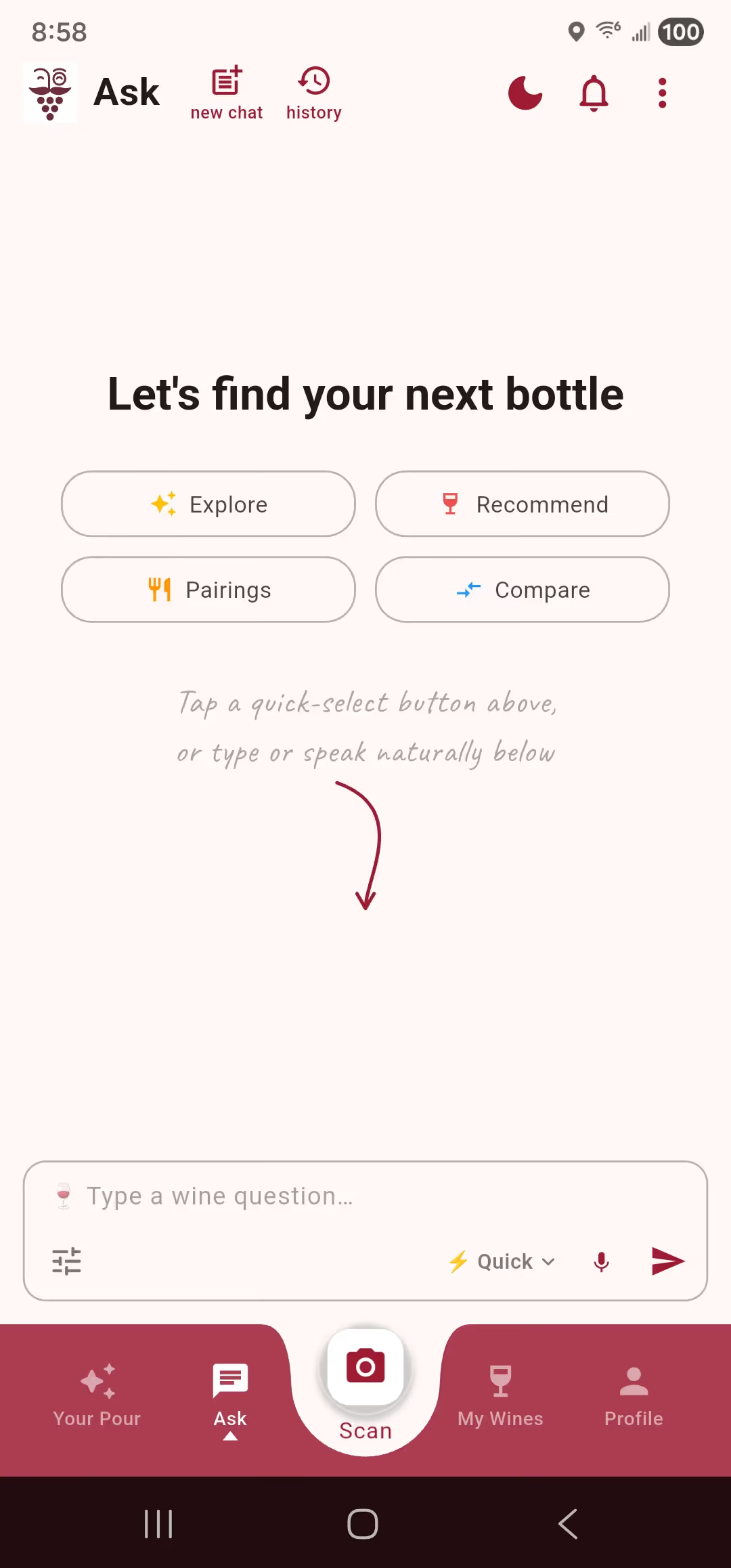
It turns shelf clues into clear decisions
A good recommendation tool should do the sorting you’d otherwise do in your head.
It should help you answer questions like:
- Do I want fresher or darker
- What works with lamb, burgers, or pizza
- Which bottle fits my price range
- What should I pick if the table is sharing different dishes
That’s a lot easier than trying to decode ten labels while someone waits on your order.
It works best when you know your own pattern
You don’t need wine vocabulary. You just need to notice what you tend to enjoy.
Maybe you usually like reds that feel smooth and dark. Maybe you prefer bottles that feel cleaner and less heavy. Maybe you want a safe restaurant pick that won’t start a debate at the table.
Once a tool learns that pattern, recommendations get more useful and more personal. The choice gets faster too.
Confidence is the whole point
The best malbec in argentina isn’t a trophy bottle. It’s the one you can choose calmly, open happily, and enjoy with dinner without second-guessing yourself.
That’s the standard worth using.
If you want help choosing wine in the moment, Sommy.ai is built for exactly this kind of decision. It helps you scan a shelf or wine list, match a bottle to your taste and meal, and pick confidently without needing to become a wine expert.

EntreprEngineur. Runs on latte's. Creates with the intensity of a downhill run—fast, slightly chaotic, ideally followed by a glass of wine.